With the recent announcement of OpenAI's GPT-4, the entire world has been wondering about its true powers. Currently, it’s available only through the prompt-based web interface on OpenAI for paid users. While those without paid subscriptions to OpenAI still cannot access it, publicly available demos showed its powers quite well.
Intent-based NLP is a technique we’ve beenusing quite recently on our projects, and its key difference is that thedeveloper has to train certain intents, which a Chatbot (for example) shouldhandle. For those intents, it needs to receive data, so that if there is a greet_intentto initiate the conversation with the end user, the data samples would looklike this: “[Hello, Welcome, Hi, Good Morning]”.
With GPT-3.5 and the upcoming GPT-4 models, wedon't have to do this anymore. All the model needs, is to detect a certainintention defined by the developer. The better described, the more reliable itwill be. This removes the need to provide training data; only an initial promptdescribing the intention.
With that said, here are other key advantagesof ChatGPT versus Intent-based NLP:
- Flexibility: Unlike intent-based NLP systems, ChatGPT doesn't rely on pre-defined intent categories or templates to generateresponses. Instead, it can generate responses based on a wide range of input,making it more flexible and adaptable to different types of conversations.
- Out-of-the-box Natural Language Processing: ChatGPT has a deep understanding of natural language and can generate responsesthat are contextually appropriate and grammatically correct. This allows it togenerate more sophisticated and nuanced responses than a simple intent-basedNLP system.
- Ability To Learn On Its Own: ChatGPT is amachine learning model that can continually learn and improve its responsesover time, based on feedback from users. This means that it can adapt to newlanguage patterns and stay up to date with the latest trends and expressions.
- Personalization: ChatGPT can be customized to fit the specific needs of a particular user or business. This means that it cangenerate personalized responses that are tailored to the individual user'spreferences and needs.
Overall, while intent-based NLP systems areuseful for certain types of applications, and especially powerful for business intelligence, ChatGPT's flexibility,natural language processing capabilities, ability to learn, and personalizationmake it a more versatile and powerful language model in a wide range ofcontexts. It’s important to note that if an intent-based NLP doesn’t supportgenerating human-like responses, it most likely means that Natural languagegeneration (NLG) wasn’t implemented, which does not have to be directly tied toall intent-based NLP systems.
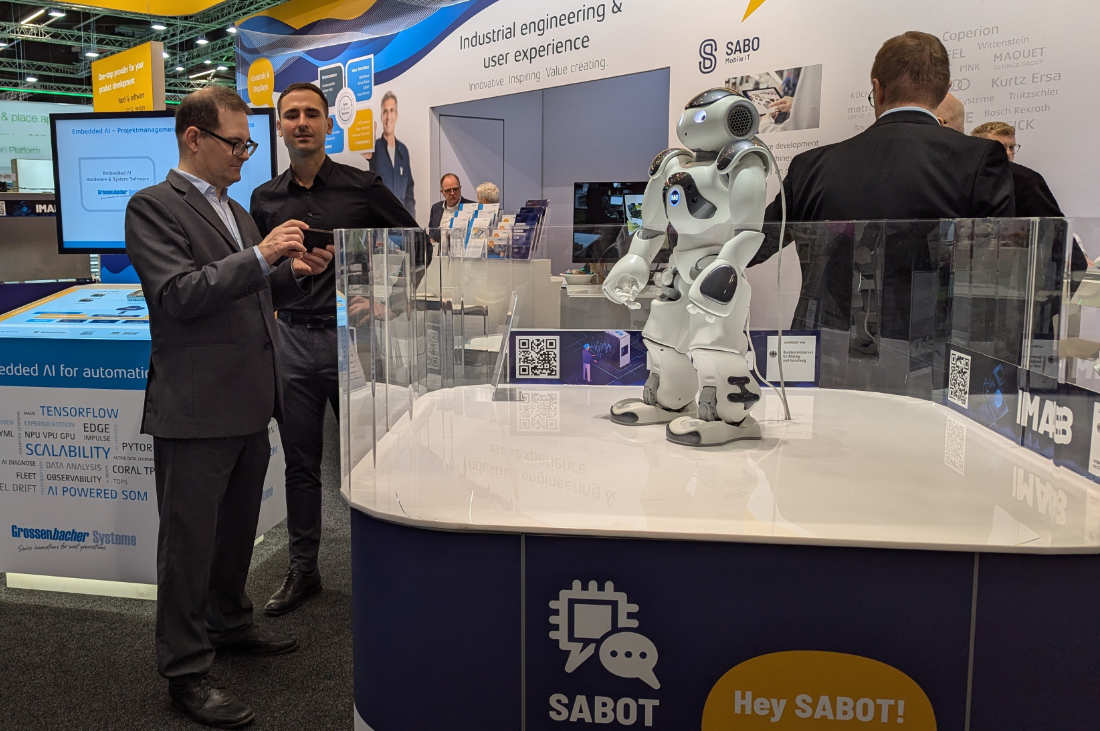
SABOT is currently our company’s example of asuccessful intent-based NLP model. We will look into using LLM’s (LargeLanguage Models) such as ChatGPT to enhance its feature set and abilities evenfurther in the future. Learn more here.