

Not every organization is - and that's completely fine. The companies that get the most out of agentic AI aren't necessarily the ones who move fastest. They're the ones who move with clarity: they know what they have, what they're missing, and what they want to achieve.
This post gives you a practical way to think through your own readiness. At the end, you'll find a link to a short questionnaire that maps your situation across five key areas. No score is a bad score - every gap you find is a gap you can close.
Most AI tools answer questions. Agentic AI gets things done.
Give it a goal - "resolve this alarm", "prepare this report", "check this shipment" - and it plans the steps, calls the right systems and data sources, evaluates the result, and loops until the job is finished. All within the rules and boundaries you define.
That's a fundamentally different kind of capability. It's also a fundamentally different kind of requirement. You can run a chatbot on top of a PDF. You can't run a meaningful agentic system without connected data, defined processes, and a team that knows how to keep humans appropriately in the loop.
So, are you ready?
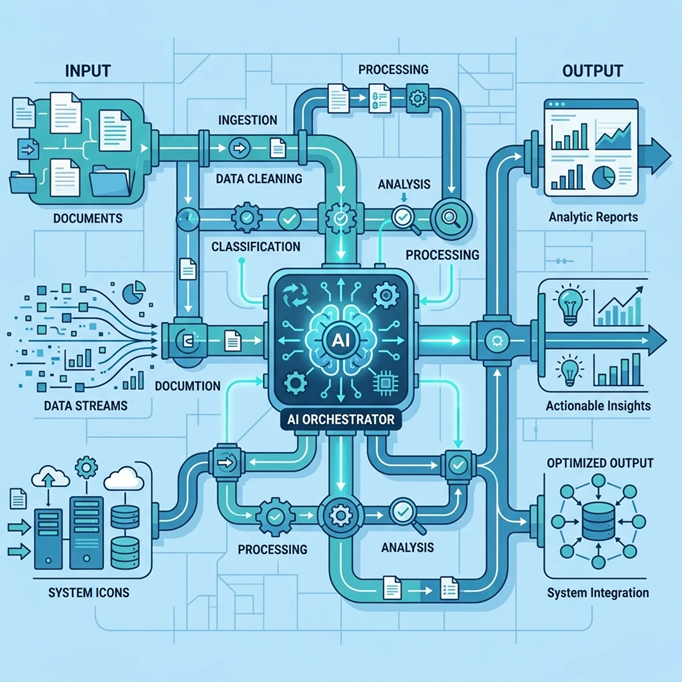
The best starting points for agentic AI are processes that are painful, repetitive, and multi-step - things that require hopping between systems, chasing information, or waiting for someone to manually review and forward something.
Think about your last week. Was there a workflow that ate up more time than it should? That required three people to coordinate something that should take minutes? That produced inconsistent results depending on who handled it?
If yes, you have a candidate. If you can name two or three of those, you have a pipeline.
Readiness indicator: Can you describe, in plain language, a process you'd love to hand off to a capable digital assistant?
Agentic AI doesn't create data. It uses the data you already have. That means your systems need to be reachable: through APIs, integration layers, databases, or structured exports.
This doesn't require a perfect data landscape. It requires an honest one. You need to know where the relevant data lives, whether it's accurate enough to act on, and whether it can be accessed programmatically without a week of custom development for every connection.
Many organizations discover during this step that their data is fine - it's just spread across systems that weren't built to talk to each other. That's a solvable problem, but it's better to know it upfront.
Readiness indicator: If an external system needed to read your key operational data today, could it? How long would that take to set up?
Agentic AI acts. That's the whole point. Which means somebody needs to have decided - in advance - what it's allowed to do, what requires human approval, and what it should never attempt on its own.
This isn't primarily a technical question. It's a leadership question. Does your organization have a working view on AI risk and accountability? Is there a person or a team that owns AI governance decisions, or does every new AI initiative end up in an informal grey zone?
You don't need a perfect policy document on day one. But you do need a leadership team that takes the question seriously and is willing to define boundaries - and update them as the system proves itself.
Readiness indicator: If an AI agent made a wrong call on a low-stakes task, who in your organization would be responsible for reviewing and correcting it?
The organizations where agentic AI stalls are rarely the ones with technical gaps. They're the ones where the people who would use the system most - operations leads, team managers, process owners - have never been part of the conversation.
Curiosity and caution aren't opposites. The most effective teams are cautious precisely because they've engaged closely enough to understand what could go wrong. What slows things down is passive resistance: a team that wasn't involved, doesn't see the value, and has good reasons to be skeptical.
Early involvement - even just a workshop or a structured demo - makes an enormous difference. People who help shape the guardrails are much more willing to trust the outcomes.
Readiness indicator: Have the people who would work alongside an AI agent been involved in any conversation about how it would behave?
"We want to use AI" is a starting point, not a strategy. The organizations that make real progress have gotten specific: they know which process they're targeting first, roughly what the agent would need to do, and how they'd measure whether it worked.
This specificity isn't about writing a detailed spec before you start. It's about having enough clarity to have a productive conversation with a technology partner - and to recognize a good pilot opportunity when you see one.
The good news: getting specific usually takes less time than people expect. One focused session with the right people is often enough to identify a first use case that is both meaningful and achievable.
Readiness indicator: Can you describe one concrete thing an AI agent would do in your environment, and how you'd know it was working?
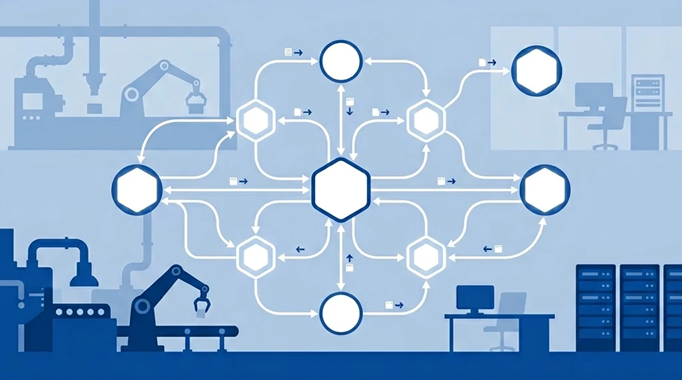
Then you're in good company - and you're better off knowing now than discovering it six months into a project.
Most readiness gaps are bridgeable. Disconnected systems can be integrated. Governance frameworks can be built iteratively. Teams can be brought along with the right communication and involvement. Data quality issues can be scoped and addressed incrementally.
The goal of a readiness assessment isn't to find reasons not to start. It's to find the right place to start - and to make sure you're not setting yourself up for a frustrating experience by skipping steps that actually matter.
We've put together a short self-assessment that walks through each of these areas in more detail. It takes about 10 minutes, and at the end it gives you a useful sense of where to focus - which foundations are already in place, and where it's worth investing attention before moving forward.
Take the "Are You Ready for Agentic AI?" assessment
If you'd rather talk through your situation directly, you're welcome to reach out. We work with industrial and healthcare organizations on exactly this kind of readiness work - and we're happy to have a no-pressure conversation before any project is on the table.
SABO Mobile IT develops agentic AI solutions for industrial operations, maintenance, and healthcare workflows. Learn more about our approach to Agentic AI


